
product design · sanofi–ideo device innovation challenge · 2025
Atlas
What if your OBDS could do more than just drug delivery?
Atlas was designed for the Sanofi–IDEO Device Innovation Challenge 2025. The brief: reimagine the on-body drug delivery system (OBDS) experience. Existing devices like Omnipod, enFuse, and Vertiva solve the clinical problem — but they ignore the human experience. Anxiety. Stigma. Forgetting. Caregiver burden. The device ends its job the moment the dose is administered. The patient's life doesn't.
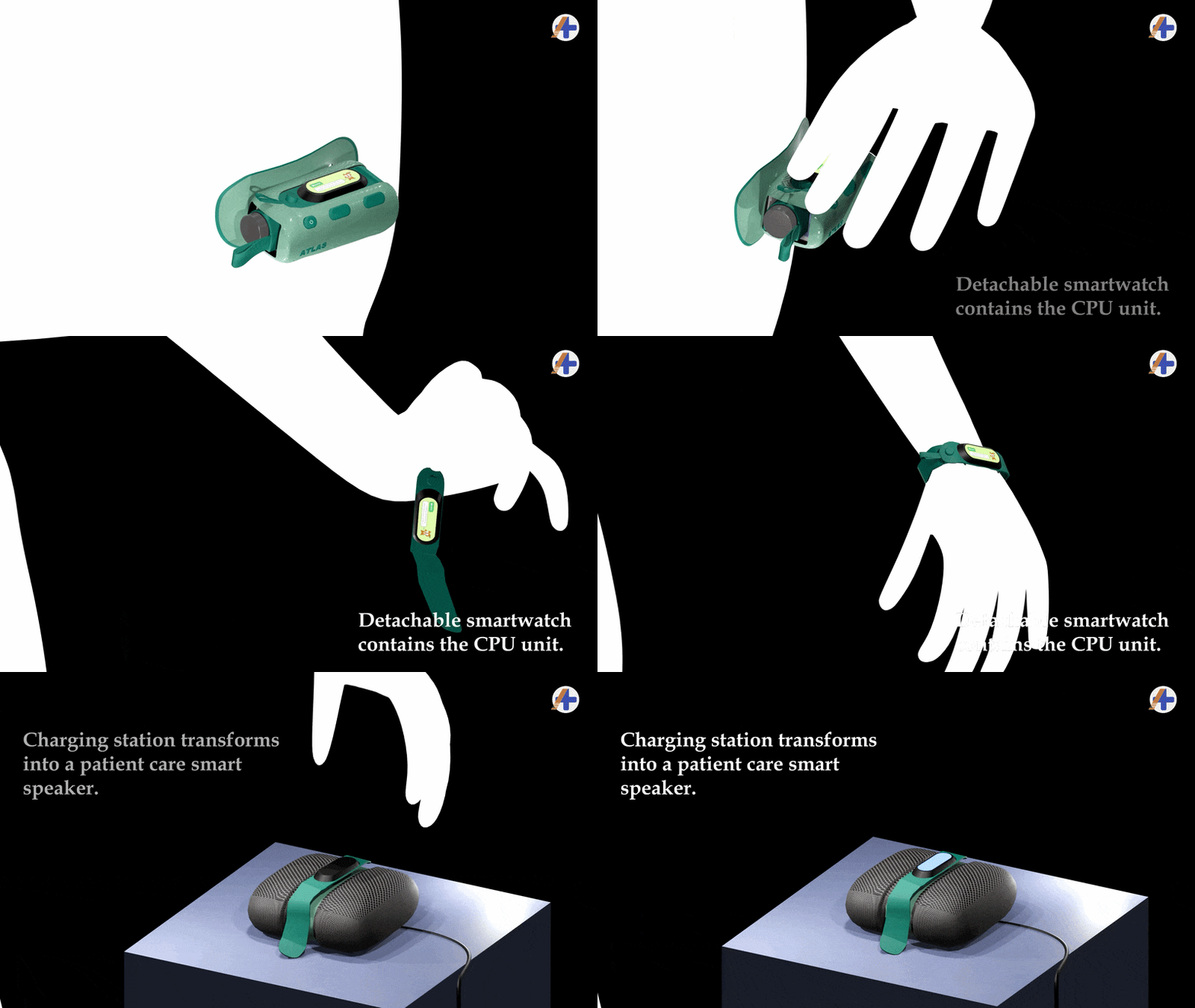
Atlas is a modular ecosystem of three connected objects: an OBDS device, a smartwatch, and a home speaker dock. Together they address the full arc of living with a chronic condition — not just the moment of administration.
What if your OBDS could do more than just drug delivery?
The clinical problem is solved. The human problem isn't.
The existing OBDS market treats drug delivery as the end goal. Omnipod, enFuse, and Vertiva are clinically effective. But they're designed around the device, not around the person wearing it. We started by asking: what does a day with chronic illness actually feel like?
The device ends. The condition doesn't.
We conducted patient interviews with people managing chronic conditions requiring regular OBDS use. Two quotes shaped the entire project direction.
"Sometimes it feels like I'm wearing a big sign that says 'I'm medically disabled.'"
— Type 1 Diabetes OBDS user"I do tend to forget. I have my reminder on my phone, but if I switch it off I forget later."
— Injector pen userThese two quotes pointed at two separate failure modes that the market hadn't addressed together: the emotional experience of wearing a medical device in public, and the cognitive failure of passive reminder systems.
Four opportunities from research
Reduce administration anxiety. Redesign the moment of administration, not just the mechanism. The ritual matters as much as the result.
Make forgetting structurally harder. Passive phone reminders fail. The system needs to integrate with the patient's environment — their home, their wrist, their routine.
Design for the full ecosystem. Caregivers, clinicians, and pharma partners are underserved. The device serves the patient; the platform can serve everyone.
Make the device livable. Form, color, and materials aren't cosmetic choices for a chronic condition patient — they're functional. A device you're proud to wear gets worn. A device that signals illness gets hidden.
Not a better device. A better ecosystem.
The design brief that came out of research: a modular, human-centered on-body drug delivery ecosystem that simplifies treatment, reduces anxiety, and grows with the patient — serving the full care network, not just the person wearing the device.

Two pivots that unlocked the final design
Our first version explored a detachable touchscreen "core unit" that refunctioned as a smartwatch or small speaker. The idea: one device that does everything. A Tamagotchi-style digital companion for managing treatment.
It tested badly. Too many moving parts, too much cognitive overhead, overlapping functions that added complexity without adding value. We stripped it back.

Pivot 1: Screen → dedicated smartwatch
Instead of the OBDS carrying a screen, we separated the interaction entirely. The smartwatch handles all patient-facing communication: reminders, administration guidance, health tracking, the digital companion. It magnetically docks to the OBDS during treatment, then returns to daily wear. Familiar interaction model, fewer failure points, cleaner form on the body.
Pivot 2: Syringe pump → peristaltic pump
The syringe pump mechanism required a form factor too large for the rounded, wearable shape we needed. Switching to a peristaltic pump — inspired by IV drip mechanics — reduced the physical footprint significantly while improving delivery consistency. One constraint solved two problems simultaneously.

The first version tried to do too much. The version that worked stripped physical complexity while keeping the ecosystem ambition. Less mechanism, same vision.
Three connected objects. One continuous experience.

OBDS Device
Modular needle heads — hypodermic or microneedle depending on treatment. Octopus-inspired suction adhesive that maintains contact through sweat and body oils. Reusable 30mL cartridge. Peristaltic pump for consistent delivery. Soft rounded form available in a full skin tone range plus expressive colors — because a device you're proud to wear gets worn.

Smartwatch
Tracks health metrics continuously. Layered reminder cadence: 24 hours, 1 hour, and 10 minutes before each dose. AI-guided multilingual administration instructions reduce errors at the moment of use. A pixel-art digital companion — subtle, not infantilizing — provides emotional continuity across the treatment day.

Home Speaker Dock
Charges the watch overnight. Provides voice-based reminders and dosing guidance for patients who prefer audio over screen interaction. Acts as a home care hub — caregiver-facing data, refill alerts, appointment reminders.
Designed for the full care network
One of the core failures of existing OBDS products is that they're designed for a single user — the patient — while ignoring everyone else in the care network. Atlas was designed for four stakeholders simultaneously.
Emily — the patient
Multilingual administration guidance, adaptive reminder cadence, a device that doesn't signal illness to everyone around her. Reduced anxiety at every step of the treatment ritual.
Peter — the caregiver
Remote monitoring through the app without hovering in person. His father maintains independence; Peter maintains peace of mind.
Dr. Lin — the clinician
Real-time adherence data. Fewer administration errors. Confidence that the patient is following the treatment protocol between appointments.
PharmaCorp — the pharma partner
Refillable cartridges reduce packaging waste and enable subscription logistics. Anonymized adherence data provides population-level insight. A branded patient ecosystem creates a direct ongoing relationship with users — not just a one-time prescription.

What this project taught me about ecosystem design
The hardest design decision on Atlas wasn't a form factor or a feature — it was learning to cut. Our first version was technically interesting. The final version was actually useful. Stripping complexity while preserving ambition is a skill, and it's one I only developed because the early prototype tested so badly.
The bigger lesson was about scope. We could have designed a better syringe. Instead we designed a system that serves a patient, their caregiver, their doctor, and their pharma company simultaneously — and makes each of their lives meaningfully easier. That's what "product thinking" actually means when the stakes are healthcare.
Atlas taught me that the hardware is only part of the problem. Iaso applies the same ecosystem thinking to the software layer — same patient, different surface.